OUCH!
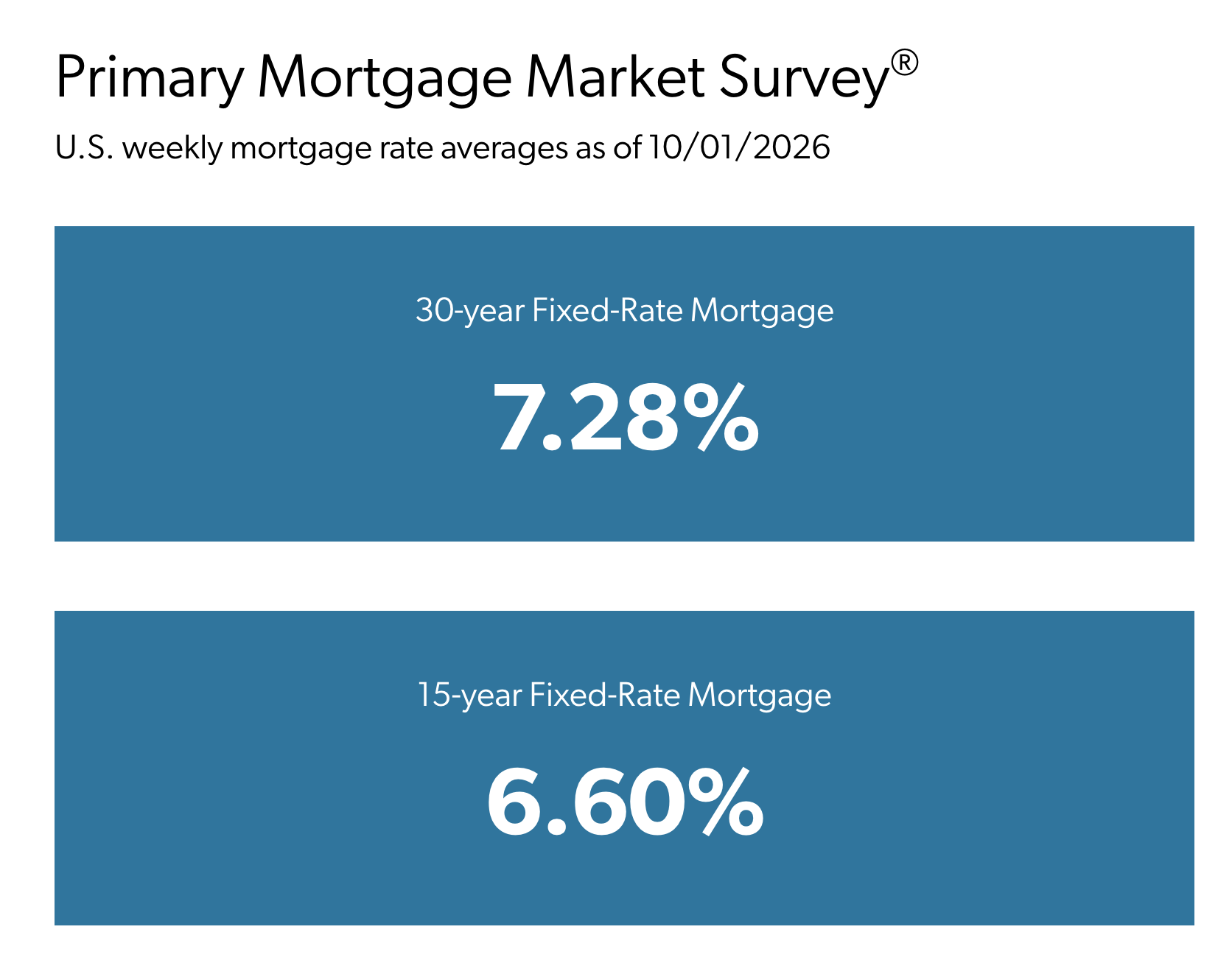
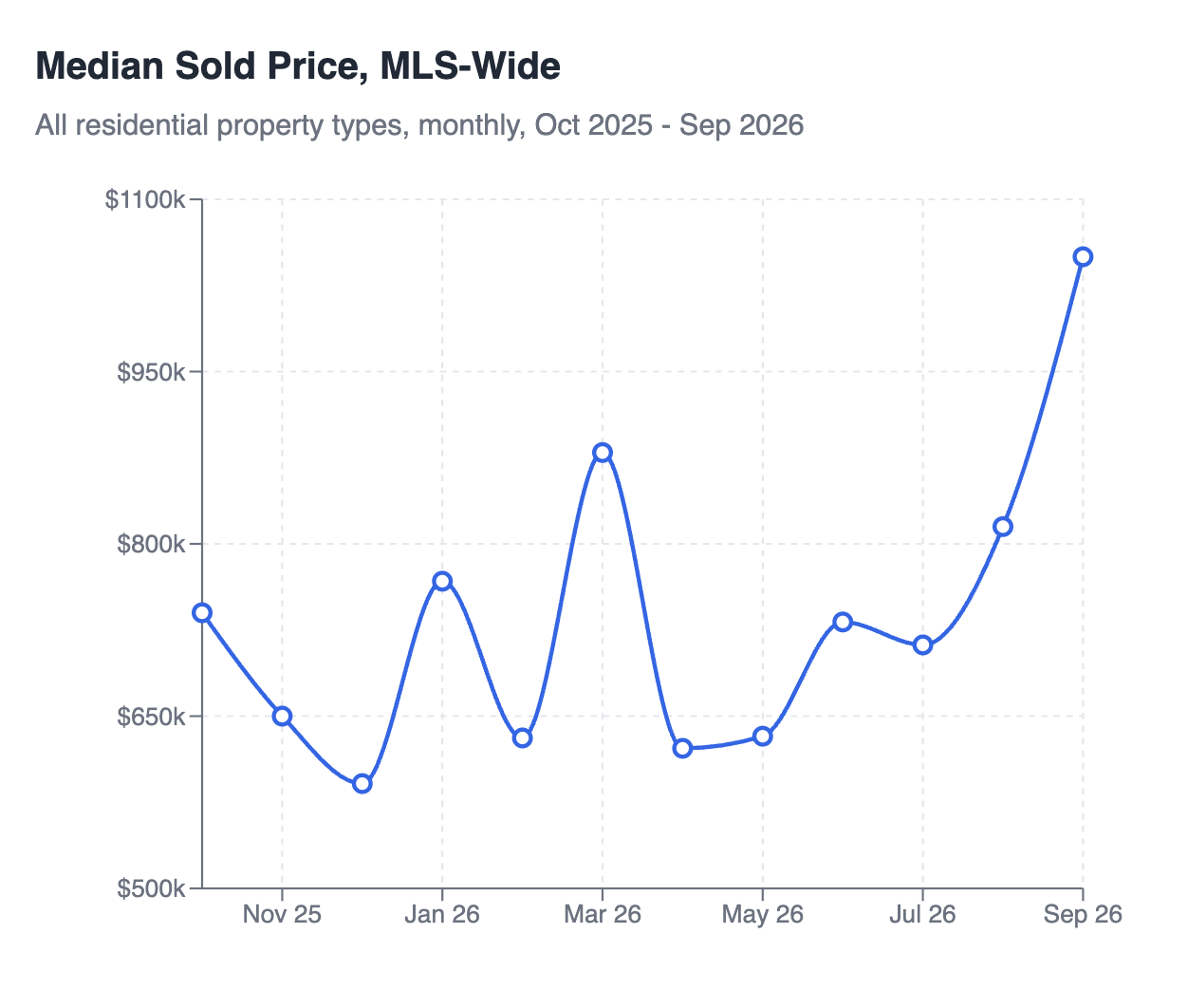
The bond market, and by extension mortgage rates, are surging. Headlines reported the 10 year treasury yield getting over 5%, for the first time since… 2007. This is a bad year to reference when it comes to real estate. Meanwhile the median sales price over our entire MLS (Parachute to Aspen) in September was $1m, an increase of over 40% since last year! How are home values continuing to go up, while interest rates create such a headwind?
In the current market trajectory, high bond yields and high mortgage rates are here to stay. But instead of lowering home values, it shrinks the market around wealthy buyer purchasing luxury home (read the article about the K shape economy). Your typical family buying a home with a 30 year mortgage is not what’s driving our market. In 2026 NAR reported that the median repeat home buyer was 62 years old, and did not use a mortgage. The average age of a first time homebuyer is now over 40 years old in the US, for the first time in history. This will remain the case for as long as both interest rates and asset valuation will remain high. But what is allowing wealthy baby boomers to move, upgrade or acquire homes, while everyone else is stuck? The answer is easy: the stock market is at an all time high, driven by AI stocks. Baby boomers own 54% or all U.S. equities. They also own 41% of U.S. homes, with little to no debt on it, giving them more levers to pull from in order to acquire a home. Right now you need wealth, in stocks or real estate, to be a real estate buyer.
So the current market dynamics are formed by 2 trends: High mortgage rates, and high stocks valuations. Are those here to stay?
Why are treasury yield rising?
The current economic environment represents a perfect storm for bond yields, and by extension mortgage rates to go up, mainly for 4 reasons.
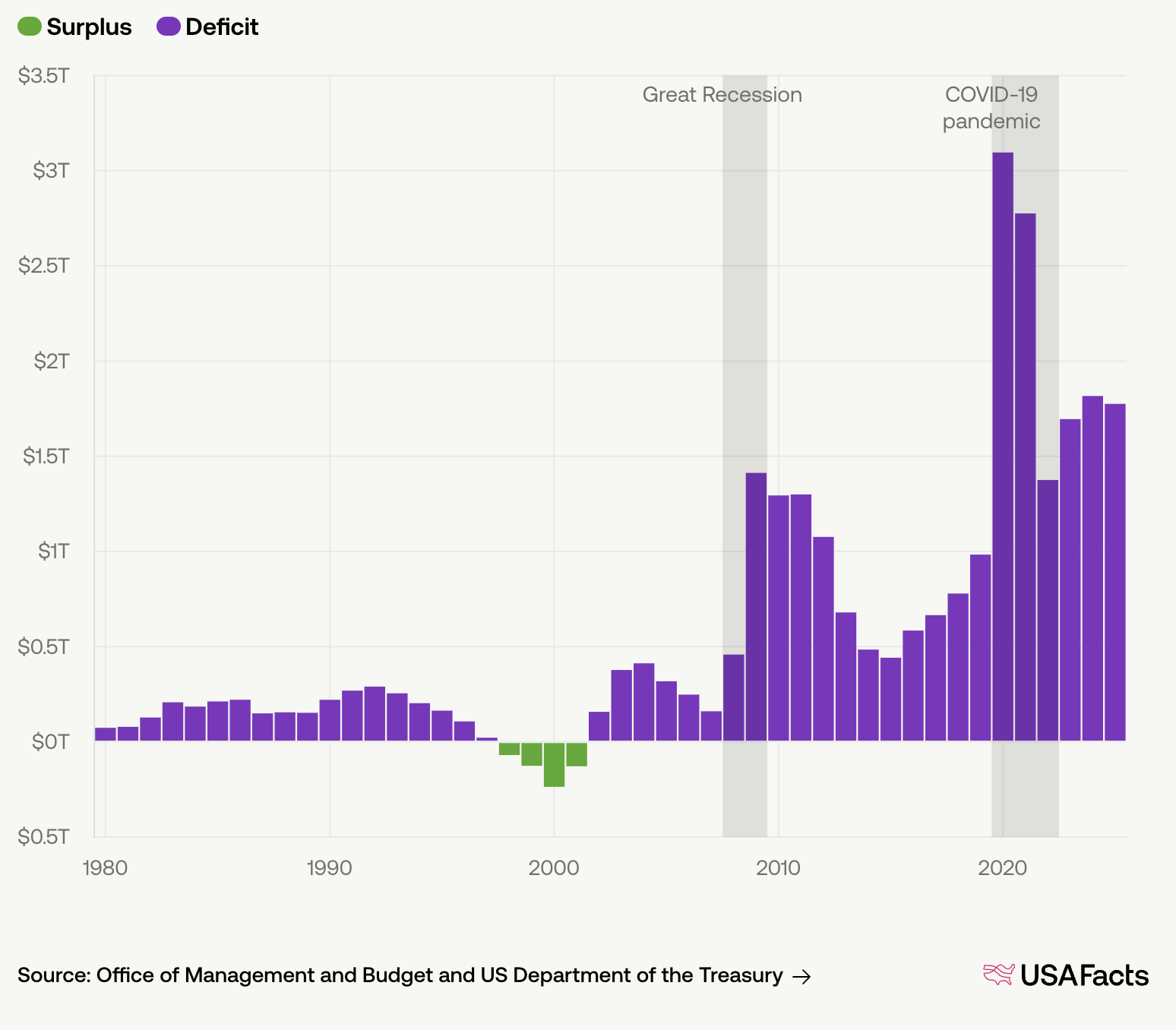
Government debt: the government debt surpassed 40 Trillion Dollars. It’s almost impossible to represent the amount of money that this is. No other entity in the history of the history of the world has played with this kind of money.
During COVID, the US government and others around the World, went on to save the economy borrowing massive amounts of money. After that, instead of going back to more balance budgets, they borrowed more each year than it did during during the great financial crisis of 2008. Good times in the economy, sustained by war time-like budgets. Fiscal discipline is long gone from from Washington DC. This tendency is not exactly confidence inspiring to bond investors, who will in return require a higher interest rate on the money they will lend to the government in order to finance this borrowing spree. The apparent carelessness of latest administrations, coming from both sides of the aisle, is responsible for bond yields going higher.
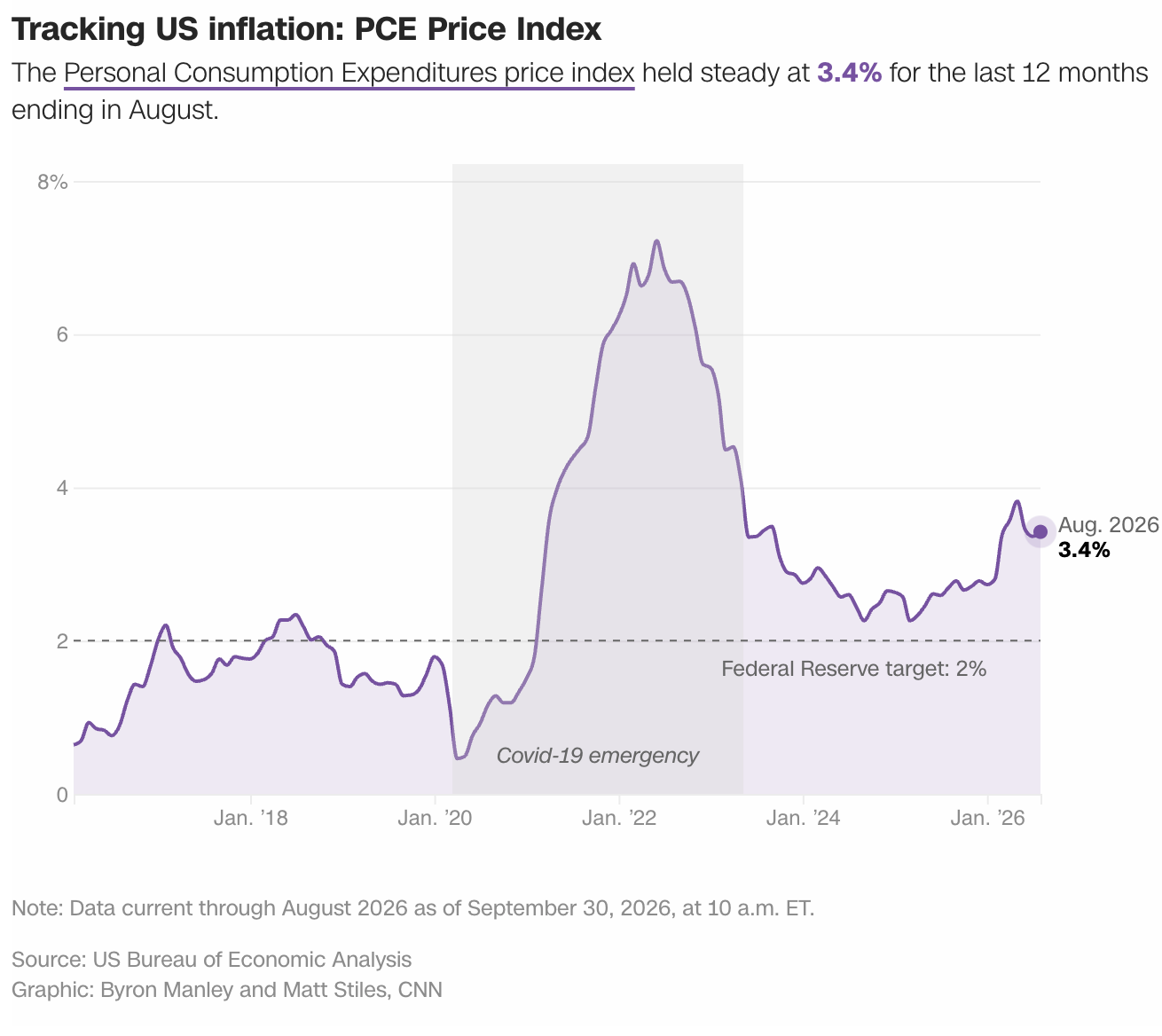
Inflation: Bond investors are mainly large institutional investors, mutual investment funds, pension funds, foreign government, government wealth funds and other large players. They are entities managing large amounts of money. They manage this money with a long term horizon. Potentially decades. Having large sums in Dollars to play with, and an extended timeline, they are mainly looking at one metric: they want the return on their bonds to be higher than the rate of inflation, in order to create a real return. Inflation is a loss in the value of the Dollars, and when you lend Dollars, and getting Dollars back 10 or 20 years later, you want to make sure that the interest getting paid to you covers the inflation (loss in the value of the Dollar) plus some profit.
With 40 Trillion Dollar of debt accumulated, and no signs of a balanced budget on the horizons, bond investors only see one way for the government to avoid bankruptcy: slowly have inflation and hopefully economic growth, eat away at the debt. Do you remember a time when $1,000 mortgage payment per month was a big number? And do you realize how today, it seems like a much smaller amount? That’s because of inflation. And it works the same on a $40T number. With inflation, and over time, that amount will become a more manageable amount. It’s still kicking the can down the road, and at least it allows you to do so. And going back to our bond investors, if they believe that that’s the intent of the government, they will ask for a higher rate to make up for that deliberate inflation.
In other words, as inflation expectations go up, bond yields, and by extension mortgage rates, go up. It’s what is happening right now. The current data seems to justify their fears, as inflation seems stuck above the 3%/yr mark, while 2% is considered being ideal to set up the economy for growth while maintaining price stability.
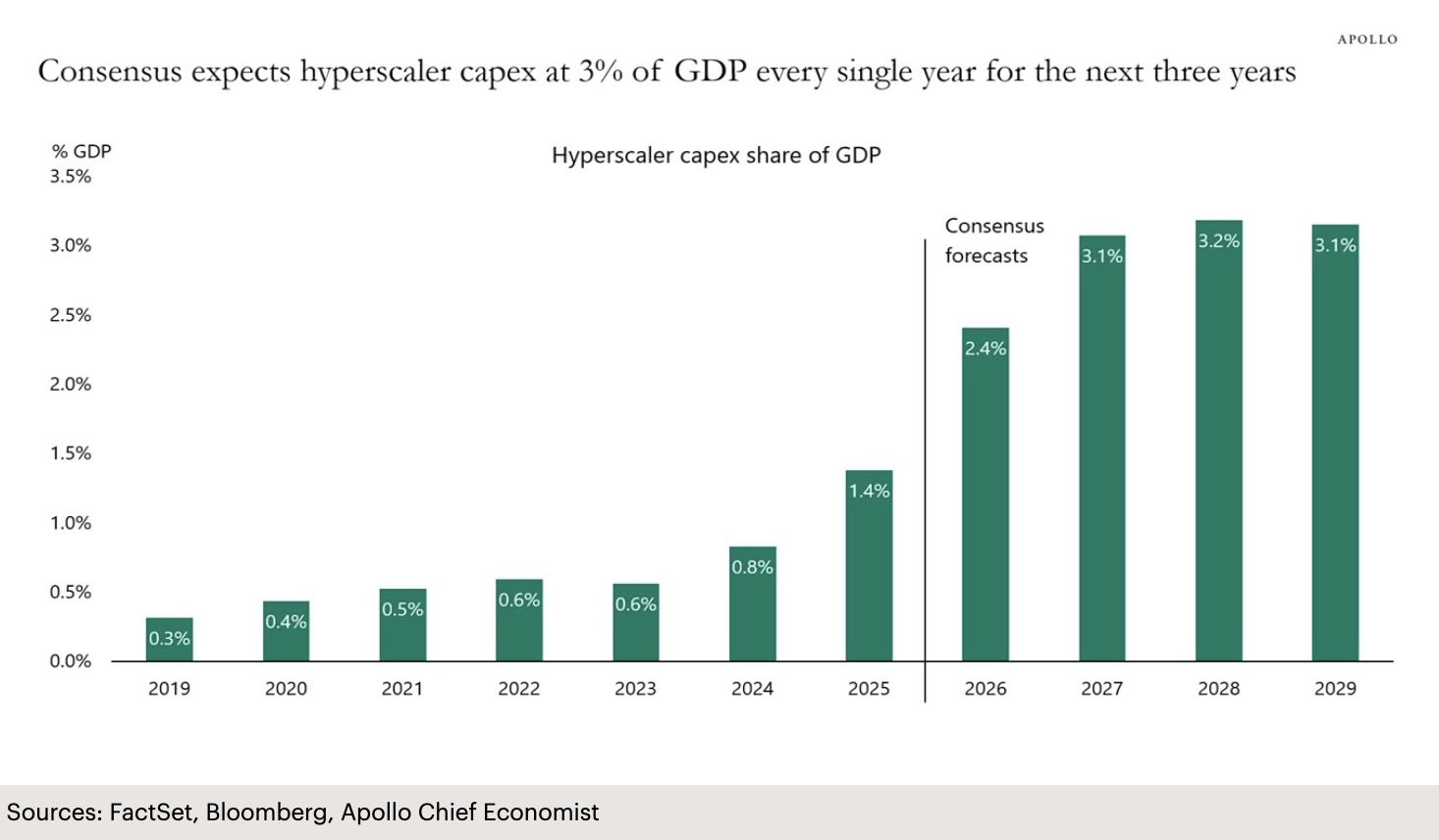
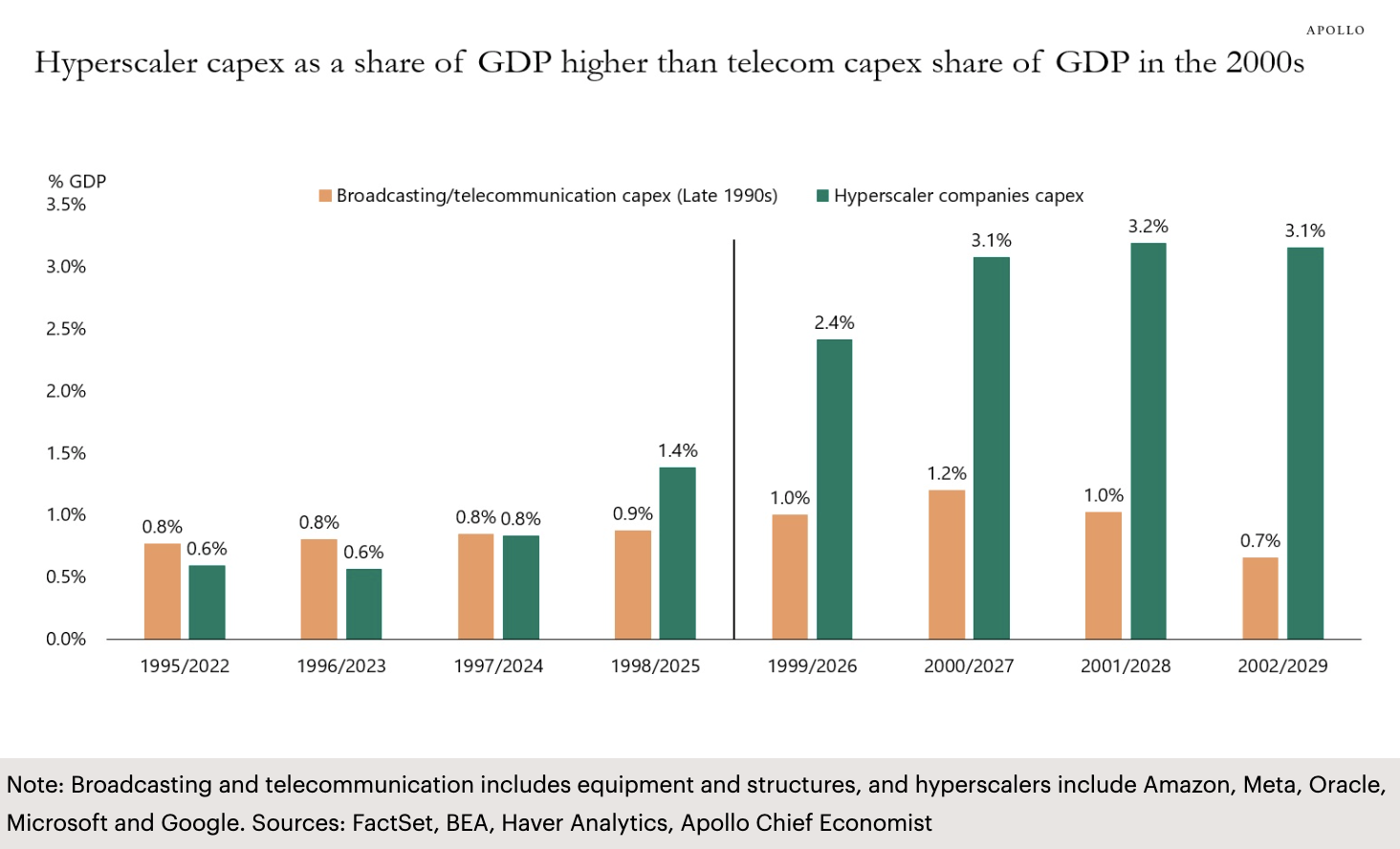
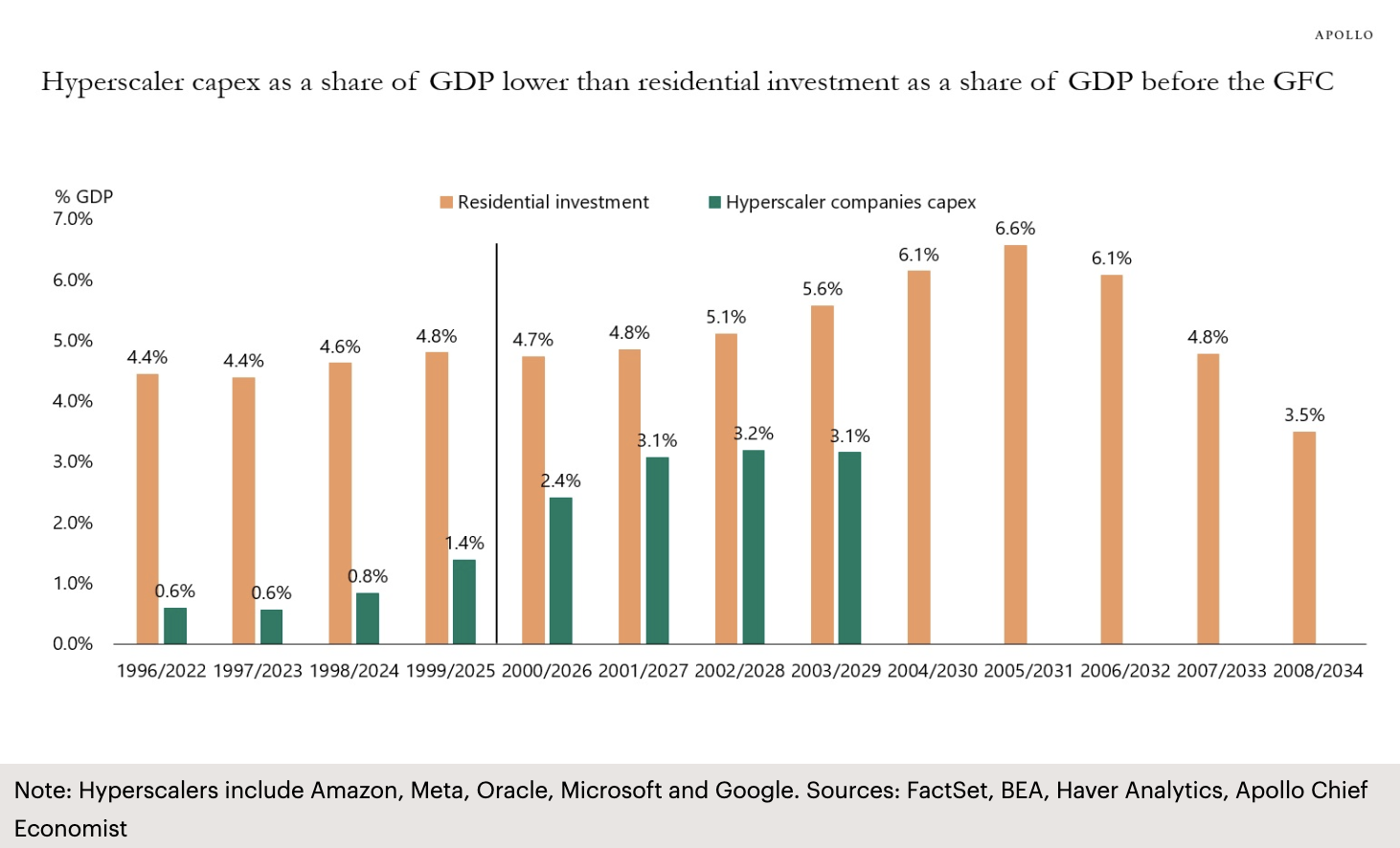
AI capital expenditure: The AI build out is costly, and it’s about to become even more so. As you can see on the second chart below, it’s 2 to 3 times larger than the broadcasting/telecommunication build out that happened in the ate 90’s/early 2000s, and that lead to the .com bubble.
Companies that used to be huge cashflow positive operations like Meta, Microsoft, or Google, are now borrowing money to build data center and other AI infrastructure. For most investors, who are the lenders of this money, it seems like lending to these companies is first choice, over lending it to the US government. It seems safer to them and they are also able to charge a higher interest rate. In other words, the US government is competing with the tech giants to capture that money. More demand, same supply: prices goes up (in this case interest rate is the price of money).
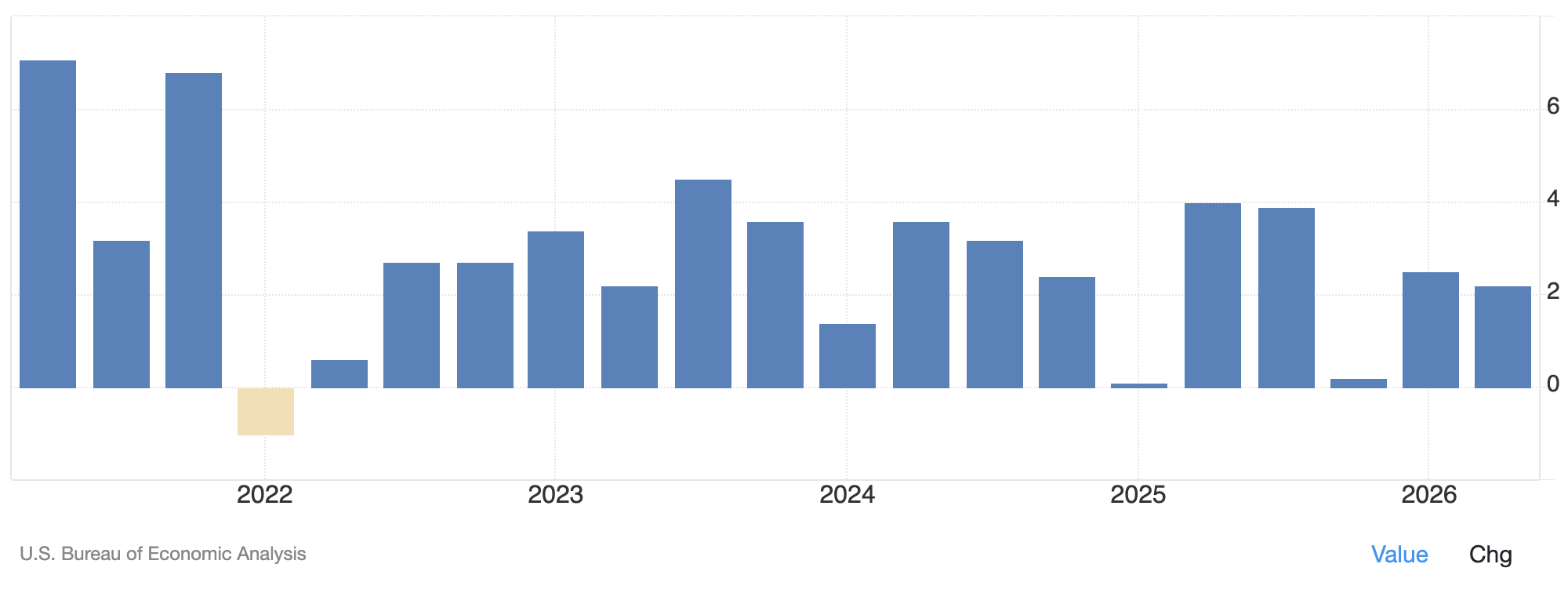
A robust US economy: low unemployment numbers, decent growth, higher than 2% inflation… The US economy is going strong, and it’s been able to handle higher rate for the last few years. There are no signs of it slowing down, and therefore the FED and the markets will keep the higher rates going for the time being.
High treasury yields, high mortgage rates, and their impact on real estate.
The high interest rates can make the amount of government debt unsustainable, and hinder its ability to fund its policies in the future. The debt service cost right now is already surpassing the defense budget in the USA. But it also determines mortgage rates, and therefore has a direct impact on the real estate market.
Historically, homeowners have traded, or refinanced their home every 10 years on average, so the 10 year yield is what mostly determines mortgage rates. Because bond yields are likely to stay high for a while, mortgage rates will likely be higher for longer. High rates tame home value appreciation. With higher rates, the bank makes more and the seller makes less. The buyers’ budget are not infinitely expendable and they can’t afford as much home with a higher rate. Nationwide, we’ve seen the higher rates ding real estate values already. And that was when they were in the 6% range. They now are in the mid 7%… That trend should continue. The median price in the US nationally for new home sales came down almost 8% from its peak in Q4 of 2022.
But not every market is the same in front of interest rate increases. If only 11.5% of the transactions in rifle are done with cash, it’s 85% in Aspen. The some market are driven by interest rates, and for others, it’s the stock market…
No mortgage, no issues with rates - How rates affect each town differently in our valley.
Here in the Roaring fork valley, the market statistic still show strong year over year appreciation. A very different picture than what we mentionned aove regarding nationwide statistic. Why would that be? In a nutshell, only rich people transact. So the closed transaction are executed at high prices. Why? rich people don’t care so much about interest rates. If rates are high, they buy cash. The stock market is still powering their purchasing power as a reliable source of liquidity.
So if rates are hurting home values in segments of the market where people borrow in order to buy, the metric to look at is the poportion of cash deal in a given town. The more cash deals, the more chance a market has to keep going up. Here is the percentage of cash deal in every town:
Aspen: 85% of cash deals this year so far
Snowmass village: 69%
Basalt: 68%
Carbondale: 50%
Glenwood Springs: 38%
New Castle: 32%
Silt: 6%
Rifle: 11.5%
Rifle and Silt are the most vulnerable market to high interest rates. Everywhere else, the market seems somewhat protected form it. From New Castle to Aspen, a lot of the real estate in purchased cash, and is not directly impacted by interest rates.
If interest rates don’t impact home values, what does?
If some homes are still purchased the “old way”, with a mortgage and house labor income to pay the monthly installment, a quick look at the typical buyer profile describes a different picture. Wealthy buyer use their wealth to acquire properties cash, or with non conventional forms of leverage. A few luxury sales prop up the market price averages, while most people find themself in a position where it;s impossible to transact, wether buy or sell.
In 2026, NAR estimated that the median age of a repeat home buyer was 62 years old.
The age of a first time home buyer is now over 40 years old.
First time home buyer represent only 21% of all purchases today, the lowest it’s ever been. A substantial amount received financial help from an older generation in order to purchase.
Baby boomers and Gen Xers (46 to 80 years old) represent almost 70% of all home buyers.
These statistics all describe the drivers of today’s market: it’s not the income level, interest rates and ability to save a down payment that are the determining factors of today’s home buyers. Today’s homebuyers are repeat buyers, who leverage equity from their current home(s) and other assets. “Surging mortgage rates are sending many buyers to the sidelines, while affluent shoppers are driving overall prices higher with big cash purchases” explains the Wall Street Journal in this article.
Baby boomers also own 54% of all the S&P 500. This year, 95% or the stock market gains came from the AI hyperscalers (Meta, Google, Anthropic, Open AI and Nvidia). There is a direct link between homebuyers ability and willingness to buy homes and support current valuation, their level of wealth, stocks valuation, and the success of the AI industry. This link can play out in two ways. Success in AI can lead to an even more divided market between the wealthy continuing to transact, and others continuing to be sidelined, with high rates pushed uop by the AI build out.
The bet on AI could also unravel, unleashing a downward wealth spiral that’ll likely result in wealthy buyer demand dropping, and mortgage rates also dropping less demand for loans from the AI world and economic stimulus by governments.
In short, the FED’s interest rate decision, at least in our area, is secondary to AI stock valuations, for their impact on home values…
What happens next?
Now that we understand the contaxt, let’s dive into what happens next. First let’s state that this is written based on my best understanding, and that this is not investment advice.
Scenario 1: AI succeeds. If AI becomes as big and important as they claim it’ll be, we’ll be in a whole new paradigm of owership in a few years. If AI is becomes able to do as much as they prepare it to do, a lot of the value in the economy will flow to capital, in order to create a return on the investment don by the big AI hyperscaler companies. It’ll be more of what we are experiencing right now, with th super rich riving the real estate market up and the rest of us not transacting. The employment market will suffer at least temporarily. in our valley, where trickle own economics is real, every homeowner will be rich in equity, but probably cash poor. First time home buyer will remain a marginal part of the transaction volume, mainly allowed by large down payments from family gifts. Real estate nationwide, more influenced by interest rates than wealth, will likely suffer.
Scenario 2: the AI bubble bursts, as investors cool down and don’t expect the pay out from AI to justify the investment. The interest rates come down as investors seek safety in goverment bonds: in this scenario the general wealth takes a hit but cheap debt will favor real estate and reverse the current trend. Real estate will trade again, and financing will unfreeze as well. Appreciation might be limited for a while since the economic environment will be temporarily somewhat depressed, as the oxigen provided by the AI boom is taken out of the room for a while. But real estate gets on more solid footing and comes out as a winner on the other side of the chaotic AI fallout.
So in my opinion, it’s AI against real estate. Right now AI is loading up on expensive debt, and real estate is not. If the bet on AI doesn’t succeed, real estate will come out victotious and seen as the safe otion that carried people through a turbulent AI bubble bursting. As a matter of fact, AI bubble fear last week took the tech company down, adn the 10 year treasury, responsible for setting mortgage rates, saw one of its biggest drops ever recorded.